A) 1
B) 2
C) 3
D) 4
F) All of the above
Correct Answer

verified
Correct Answer
verified
A) methyl propanoate
B) propyl formate
C) butanoic acid
D) None, they are all isomers of ethyl acetate.
F) B) and C)
Correct Answer
verified
Correct Answer
verified
A) diamino pentanoate
B) pentanediamine
C) pentanediamide
D) diamidopropane
F) None of the above
Correct Answer
verified
Correct Answer
verified
A) Lexan
B) nylon-66
C) polystyrene
D) poly(ethylene terephthalate)
F) B) and C)
Correct Answer
verified
Correct Answer
verified
A) sodium acetate and acetic acid
B) sodium acetate and ammonia
C) acetic acid and ammonium chloride
D) acetic acid and ammonia
F) A) and B)
Correct Answer
verified
Correct Answer
verified
A) two phosphonyl groups bonded to the same carbon
B) two phosphoryl groups bonded to the same carbon
C) two phosphonyl groups bonded to the same oxygen atom
D) two phosphoryl groups bonded to the same oxygen atom
F) None of the above
Correct Answer
verified
Correct Answer
verified
A) Amides do not undergo hydrolysis.
B) Amides are more difficult to hydrolyze than are esters.
C) Amides and esters are hydrolyzed under similar conditions.
D) Amides are more easily hydrolyzed than are esters.
F) A) and D)
Correct Answer
verified
Correct Answer
verified
A) an amide
B) an amino acid
C) an ammonium carboxylate salt
D) none of these
F) A) and C)
Correct Answer
verified
Correct Answer
verified
A) methyl formate
B) ethyl formate
C) methyl acetate
D) ethyl acetate
F) None of the above
Correct Answer
verified
Correct Answer
verified
A) 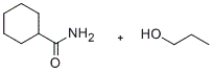
B) 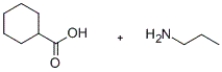
C) 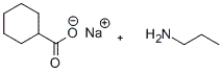
D) 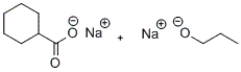
F) A) and C)
Correct Answer
verified
Correct Answer
verified
A) sodium acetate and acetic acid
B) sodium acetate and ammonia
C) acetic acid and ammonium chloride
D) acetic acid and ammonia
F) B) and C)
Correct Answer
verified
Correct Answer
verified
A) aqueous sulfuric acid
B) aqueous sodium hydroxide
C) either a or b
D) neither a nor b
F) None of the above
Correct Answer
verified
Correct Answer
verified
A) vitamin B6
B) vitamin B12
C) vitamin D
D) vitamin E
F) A) and D)
Correct Answer
verified
Correct Answer
verified
A) 1
B) 2
C) 3
D) 4
F) All of the above
Correct Answer
verified
Correct Answer
verified
A) an amide
B) an amino acid
C) Either a or b, it depends on the identity of the salt.
D) neither a nor b
F) A) and C)
Correct Answer
verified
Correct Answer
verified
A) It occurs rapidly, even in cold water.
B) It occurs rapidly in water at room temperature.
C) It occurs rapidly in boiling water.
D) none of the above
F) C) and D)
Correct Answer
verified
Correct Answer
verified
A) propanamide
B) N-ethylpropanamide
C) N,N-diethylpropanamide
D) ethyl propanoate
F) C) and D)
Correct Answer
verified
Correct Answer
verified
A) Cephalexin
B) Amoxicillin
C) Permethrin
D) Clavulanic acid
F) C) and D)
Correct Answer
verified
Correct Answer
verified
A) phosgene and bisphenol A
B) phosgene and the disodium salt of bisphenol A
C) H2CO3 and bisphenol A
D) H2CO3 and the disodium salt of bisphenol A
F) B) and D)
Correct Answer
verified
Correct Answer
verified
A) The anhydride physically absorbs the water, but no chemical reaction occurs.
B) The anhydride reacts slowly to produce two molecules of carboxylic acid.
C) The anhydride reacts readily to produce two molecules of carboxylic acid.
D) What happens is highly dependent on the identity of the anhydride.
F) B) and C)
Correct Answer
verified
Correct Answer
verified
Showing 81 - 100 of 117
Related Exams