Filters
Question type

Study Flashcards

Which of these ions is aromatic? Assume all structures are planar. Which of these ions is aromatic? Assume all structures are planar.   A)  I B)  II C)  III D)  I and II E)  I, II, and III


A) I
B) II
C) III
D) I and II
E) I, II, and III

F) None of the above
G) B) and E)

Correct Answer

verifed

verified

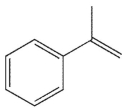
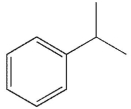
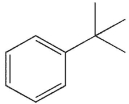
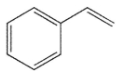
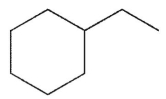
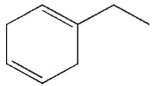
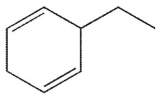
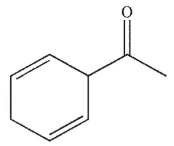
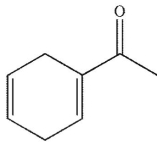
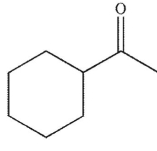
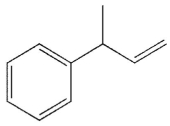
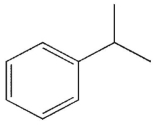
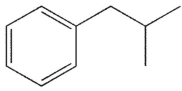
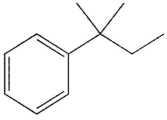
Compounds W, X, Y and Z are all alkylbenzenes. W reacts with OsO4 and with NBS. X reacts with NBS , but not OsO4. Y reacts with neither NBS nor OsO4 , and Z reacts with OsO4 but not with NBS . Which of these structures is compound X ?


A) Compounds W, X, Y and Z are all alkylbenzenes. W reacts with  OsO<sub>4</sub> and with NBS.  X  reacts with  NBS , but not OsO<sub>4</sub>.  Y  reacts with neither NBS nor  OsO<sub>4</sub> , and  Z  reacts with  OsO<sub>4</sub> but not with  NBS . Which of these structures is compound  X  ? A)    B)    C)    D)    E)  None of these
B) Compounds W, X, Y and Z are all alkylbenzenes. W reacts with  OsO<sub>4</sub> and with NBS.  X  reacts with  NBS , but not OsO<sub>4</sub>.  Y  reacts with neither NBS nor  OsO<sub>4</sub> , and  Z  reacts with  OsO<sub>4</sub> but not with  NBS . Which of these structures is compound  X  ? A)    B)    C)    D)    E)  None of these
C) Compounds W, X, Y and Z are all alkylbenzenes. W reacts with  OsO<sub>4</sub> and with NBS.  X  reacts with  NBS , but not OsO<sub>4</sub>.  Y  reacts with neither NBS nor  OsO<sub>4</sub> , and  Z  reacts with  OsO<sub>4</sub> but not with  NBS . Which of these structures is compound  X  ? A)    B)    C)    D)    E)  None of these
D) Compounds W, X, Y and Z are all alkylbenzenes. W reacts with  OsO<sub>4</sub> and with NBS.  X  reacts with  NBS , but not OsO<sub>4</sub>.  Y  reacts with neither NBS nor  OsO<sub>4</sub> , and  Z  reacts with  OsO<sub>4</sub> but not with  NBS . Which of these structures is compound  X  ? A)    B)    C)    D)    E)  None of these
E) None of these

F) C) and D)
G) D) and E)

Correct Answer

verifed

verified

Which of these conditions is not a requirement for aromaticity?


A) planarity
B) (4 n) Ο€
electrons
C) conjugation
D) cyclic structure
E) (4 n+2) Ο€ electrons

F) B) and E)
G) C) and D)

Correct Answer

verifed

verified

Draw an arrow-pushing mechanism for the following transformation.Include all lone pairs and single electrons, curved arrows, and formal charges.Indicate the relative rate of each step. Draw an arrow-pushing mechanism for the following transformation.Include all lone pairs and single electrons, curved arrows, and formal charges.Indicate the relative rate of each step.

Correct Answer

verifed

verified

blured image The first step is slow and ra...

View Answer

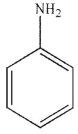
Which of the following structures is aniline?


A) Which of the following structures is aniline? A)    B)    C)    D)    E)
B) Which of the following structures is aniline? A)    B)    C)    D)    E)
C) Which of the following structures is aniline? A)    B)    C)    D)    E)
D) Which of the following structures is aniline? A)    B)    C)    D)    E)
E) Which of the following structures is aniline? A)    B)    C)    D)    E)

F) All of the above
G) C) and D)

Correct Answer

verifed

verified

Which of the following structures is the product of the reaction shown here? Which of the following structures is the product of the reaction shown here?   A)    B)    C)    D)    E)


A) Which of the following structures is the product of the reaction shown here?   A)    B)    C)    D)    E)
B) Which of the following structures is the product of the reaction shown here?   A)    B)    C)    D)    E)
C) Which of the following structures is the product of the reaction shown here?   A)    B)    C)    D)    E)
D) Which of the following structures is the product of the reaction shown here?   A)    B)    C)    D)    E)
E) Which of the following structures is the product of the reaction shown here?   A)    B)    C)    D)    E)

F) B) and E)
G) B) and D)

Correct Answer

verifed

verified

Draw ortho-methoxytoluene.

Correct Answer

verifed

verified

Devise a multistep synthesis for the following transformation.You may use any organic or inorganic reagents of your choice.Show the reagents necessary for each step and the product of each step. Devise a multistep synthesis for the following transformation.You may use any organic or inorganic reagents of your choice.Show the reagents necessary for each step and the product of each step.

Correct Answer

verifed

verified

Draw a mechanism for the following transformation.Include all lone pairs of electrons, curved arrows, and formal charges. Draw a mechanism for the following transformation.Include all lone pairs of electrons, curved arrows, and formal charges.

Correct Answer

verifed

verified

Which of the following structures is the product of the reaction shown here? Which of the following structures is the product of the reaction shown here?   A)    B)    C)    D)    E)


A) Which of the following structures is the product of the reaction shown here?   A)    B)    C)    D)    E)
B) Which of the following structures is the product of the reaction shown here?   A)    B)    C)    D)    E)
C) Which of the following structures is the product of the reaction shown here?   A)    B)    C)    D)    E)
D) Which of the following structures is the product of the reaction shown here?   A)    B)    C)    D)    E)
E) Which of the following structures is the product of the reaction shown here?   A)    B)    C)    D)    E)

F) A) and E)
G) None of the above

Correct Answer

verifed

verified

Which of the following ions is not aromatic? Assume all structures are planar


A)
Which of the following ions is not aromatic? Assume all structures are planar A)     B)    C)     D)    E)
B)
Which of the following ions is not aromatic? Assume all structures are planar A)     B)    C)     D)    E)
C)
Which of the following ions is not aromatic? Assume all structures are planar A)     B)    C)     D)    E)
D)
Which of the following ions is not aromatic? Assume all structures are planar A)     B)    C)     D)    E)
E)
Which of the following ions is not aromatic? Assume all structures are planar A)     B)    C)     D)    E)

F) A) and B)
G) A) and C)

Correct Answer

verifed

verified

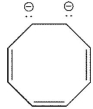
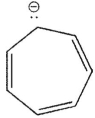
Which of these ions contains 4n Ο€ electrons? Which of these ions contains  4n Ο€ electrons?   A)  I B)  II C)  I and II D)  I and III E)  IV


A) I
B) II
C) I and II
D) I and III
E) IV

F) A) and B)
G) B) and D)

Correct Answer

verifed

verified

How many isomeric trisubstituted benzenes C3H3XYZ are possible?

Correct Answer

verifed

verified

Place the three molecules shown here in order of increasing basicity. Place the three molecules shown here in order of increasing basicity.   A)    B)    C)    D)    E)


A) Place the three molecules shown here in order of increasing basicity.   A)    B)    C)    D)    E)
B) Place the three molecules shown here in order of increasing basicity.   A)    B)    C)    D)    E)
C) Place the three molecules shown here in order of increasing basicity.   A)    B)    C)    D)    E)
D) Place the three molecules shown here in order of increasing basicity.   A)    B)    C)    D)    E)
E) Place the three molecules shown here in order of increasing basicity.   A)    B)    C)    D)    E)

F) B) and E)
G) B) and C)

Correct Answer

verifed

verified

Draw the product of the following reaction. Draw the product of the following reaction.

Correct Answer

verifed

verified

Which of the following statements is false?


A) Benzene undergoes substitution reactions easier than addition reactions.
B) Alternating C-C bonds in benzene have different lengths.
C) Benzene does not undergo Diels-Alder reactions.
D) Hydrogenation of benzene is extremely slow and requires extreme conditions.
E) The double bonds in benzene are conjugated.

F) A) and B)
G) A) and E)

Correct Answer

verifed

verified

Draw a complete mechanism for the following transformation.Include all lone pairs and single electrons, curved arrows, and formal charges.Include all significant resonance structures. Draw a complete mechanism for the following transformation.Include all lone pairs and single electrons, curved arrows, and formal charges.Include all significant resonance structures.

Correct Answer

verifed

verified

The compound below is called benzofuran. Suggest an isomeric structure containing fused 5 -membered heterocycle. Does it obey the 4n +2 rule? The compound below is called benzofuran. Suggest an isomeric structure containing fused 5 -membered heterocycle. Does it obey the 4n +2 rule?

Correct Answer

verifed

verified

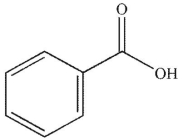
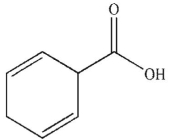
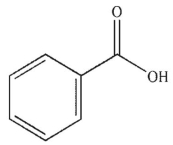
Which of the following will not react with KMnO4?


A) Which of the following will not react with  KMnO<sub>4</sub>? A)   B)   C)   D)   E)
B) Which of the following will not react with  KMnO<sub>4</sub>? A)   B)   C)   D)   E)
C) Which of the following will not react with  KMnO<sub>4</sub>? A)   B)   C)   D)   E)
D) Which of the following will not react with  KMnO<sub>4</sub>? A)   B)   C)   D)   E)
E) Which of the following will not react with  KMnO<sub>4</sub>? A)   B)   C)   D)   E)

F) A) and C)
G) B) and D)

Correct Answer

verifed

verified

Which of these two molecules is more reactive in an SN1 reaction, and why?Which of these two molecules is more reactive in an S<sub>N</sub>1 reaction, and why?

Correct Answer

verifed

verified

Molecule B is more reactive in an SN1 rea...

View Answer

Showing 41 - 60 of 66

Related Exams

Show Answer