Filters
Question type

Study Flashcards

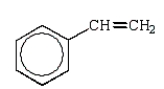
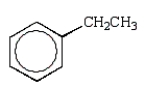
Which name(s) of the following molecule is/are incorrect? Which name(s)  of the following molecule is/are incorrect?   A)  styrene B)  vinylbenzene C)  ethylbenzene D)  phenylethene E)  a and b


A) styrene
B) vinylbenzene
C) ethylbenzene
D) phenylethene
E) a and b

F) A) and E)
G) B) and C)

Correct Answer

verifed

verified

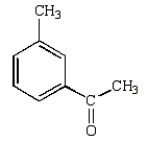
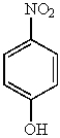
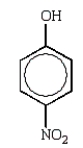
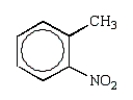
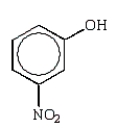
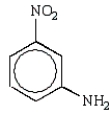
Which of the following molecules is o-nitrophenol?


A) Which of the following molecules is o-nitrophenol? A)    B)    C)    D)    E)
B) Which of the following molecules is o-nitrophenol? A)    B)    C)    D)    E)
C) Which of the following molecules is o-nitrophenol? A)    B)    C)    D)    E)
D) Which of the following molecules is o-nitrophenol? A)    B)    C)    D)    E)
E) Which of the following molecules is o-nitrophenol? A)    B)    C)    D)    E)

F) B) and C)
G) A) and D)

Correct Answer

verifed

verified

Which statement about benzene is true?


A) All six hydrogens in benzene are chemically equivalent.
B) Benzene decolorizes bromine solutions.
C) The molecule is planar, and each carbon is at the corner of a regular hexagon.
D) Both a and c are true.
E) Both b and c are true.

F) B) and C)
G) B) and E)

Correct Answer

verifed

verified

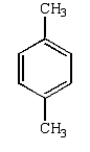
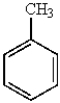
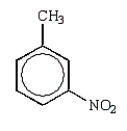
In electrophilic aromatic substitution reactions, which of the following molecules are considered to be less reactive than benzene?


A) In electrophilic aromatic substitution reactions, which of the following molecules are considered to be less reactive than benzene? A)    B)    C)    D)    E)
B) In electrophilic aromatic substitution reactions, which of the following molecules are considered to be less reactive than benzene? A)    B)    C)    D)    E)
C) In electrophilic aromatic substitution reactions, which of the following molecules are considered to be less reactive than benzene? A)    B)    C)    D)    E)
D) In electrophilic aromatic substitution reactions, which of the following molecules are considered to be less reactive than benzene? A)    B)    C)    D)    E)
E) In electrophilic aromatic substitution reactions, which of the following molecules are considered to be less reactive than benzene? A)    B)    C)    D)    E)

F) A) and D)
G) A) and E)

Correct Answer

verifed

verified

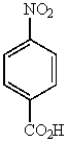
What is the final product of the following reaction sequence? What is the final product of the following reaction sequence?   A)    B)    C)    D)    E)


A) What is the final product of the following reaction sequence?   A)    B)    C)    D)    E)
B) What is the final product of the following reaction sequence?   A)    B)    C)    D)    E)
C) What is the final product of the following reaction sequence?   A)    B)    C)    D)    E)
D) What is the final product of the following reaction sequence?   A)    B)    C)    D)    E)
E) What is the final product of the following reaction sequence?   A)    B)    C)    D)    E)

F) A) and E)
G) None of the above

Correct Answer

verifed

verified

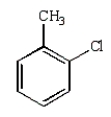
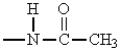
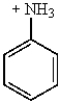
The only group among the following that is m-directing is:


A) The only group among the following that is m-directing is: A)    B)    C)    D)    E)
B) The only group among the following that is m-directing is: A)    B)    C)    D)    E)
C) The only group among the following that is m-directing is: A)    B)    C)    D)    E)
D) The only group among the following that is m-directing is: A)    B)    C)    D)    E)
E) The only group among the following that is m-directing is: A)    B)    C)    D)    E)

F) A) and D)
G) B) and C)

Correct Answer

verifed

verified

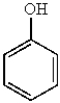
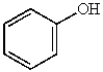
Which of the following structures accurately represents phenol?


A) Which of the following structures accurately represents phenol? A)    B)    C)    D)    E)
B) Which of the following structures accurately represents phenol? A)    B)    C)    D)    E)
C) Which of the following structures accurately represents phenol? A)    B)    C)    D)    E)
D) Which of the following structures accurately represents phenol? A)    B)    C)    D)    E)
E) Which of the following structures accurately represents phenol? A)    B)    C)    D)    E)

F) B) and D)
G) A) and E)

Correct Answer

verifed

verified

Using the following monosubstituted benzene, which position would be meta to X? Using the following monosubstituted benzene, which position would be meta to X?   A)  1 B)  2 C)  3 D)  4 E)  5


A) 1
B) 2
C) 3
D) 4
E) 5

F) B) and C)
G) A) and B)

Correct Answer

verifed

verified

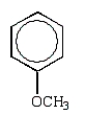
Which group is both ortho-para directing and ring-deactivating?


A) -Cl
B) -CH3
C) -NO2
D) -CHO
E) -OCH3

F) All of the above
G) B) and D)

Correct Answer

verifed

verified

Which position would be para to X? Which position would be para to X?   A)  1 B)  2 C)  3 D)  4 E)  6


A) 1
B) 2
C) 3
D) 4
E) 6

F) All of the above
G) A) and C)

Correct Answer

verifed

verified

Which of the following is NOT an electrophile in an electrophilic aromatic substitution reaction?


A) NO2+
B) (CH3) 3C+
C) SO3
D) Cl-
E) all are

F) A) and B)
G) D) and E)

Correct Answer

verifed

verified

What is the product of the following reaction? What is the product of the following reaction?   A)    B)    C)    D)    E)


A) What is the product of the following reaction?   A)    B)    C)    D)    E)
B) What is the product of the following reaction?   A)    B)    C)    D)    E)
C) What is the product of the following reaction?   A)    B)    C)    D)    E)
D) What is the product of the following reaction?   A)    B)    C)    D)    E)
E) What is the product of the following reaction?   A)    B)    C)    D)    E)

F) A) and C)
G) A) and E)

Correct Answer

verifed

verified

The expected product from the following reaction is: The expected product from the following reaction is:   A)    B)    C)    D)


A) The expected product from the following reaction is:   A)    B)    C)    D)
B) The expected product from the following reaction is:   A)    B)    C)    D)
C) The expected product from the following reaction is:   A)    B)    C)    D)
D) The expected product from the following reaction is:   A)    B)    C)    D)

E) None of the above
F) All of the above

Correct Answer

verifed

verified

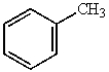
The name of the following molecule is: The name of the following molecule is:   A)  toluene B)  ethylbenzene C)  cumene D)  styrene E)  anisole


A) toluene
B) ethylbenzene
C) cumene
D) styrene
E) anisole

F) B) and C)
G) B) and D)

Correct Answer

verifed

verified

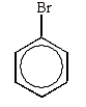
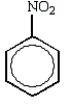
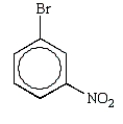
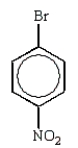
The predominant product from the sequential bromination and nitration of benzene is:


A) The predominant product from the sequential bromination and nitration of benzene is: A)    B)    C)    D)    E)
B) The predominant product from the sequential bromination and nitration of benzene is: A)    B)    C)    D)    E)
C) The predominant product from the sequential bromination and nitration of benzene is: A)    B)    C)    D)    E)
D) The predominant product from the sequential bromination and nitration of benzene is: A)    B)    C)    D)    E)
E) The predominant product from the sequential bromination and nitration of benzene is: A)    B)    C)    D)    E)

F) B) and C)
G) A) and C)

Correct Answer

verifed

verified

Which is the best sequence of reagents to use in synthesizing 2-chloro-4-nitrotoluene from benzene:


A) Cl2, FeCl3; then CH3Cl, AlCl3; then HNO3, H2SO4
B) CH3Cl, AlCl3; then Cl2, FeCl3; then HNO3, H2SO4
C) CH3Cl, AlCl3; then HNO3, H2SO4; then Cl2, FeCl3
D) SO3, H2SO4; then HNO3, H2SO4; then Cl2, FeCl3
E) HNO3, H2SO4; then Cl2, FeCl3; then CH3Cl, AlCl3

F) C) and E)
G) B) and D)

Correct Answer

verifed

verified

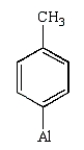
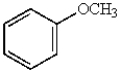
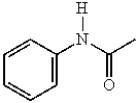
Which of the following molecules is the most reactive toward electrophilic aromatic substitution?


A) Which of the following molecules is the most reactive toward electrophilic aromatic substitution? A)    B)    C)    D)    E)
B) Which of the following molecules is the most reactive toward electrophilic aromatic substitution? A)    B)    C)    D)    E)
C) Which of the following molecules is the most reactive toward electrophilic aromatic substitution? A)    B)    C)    D)    E)
D) Which of the following molecules is the most reactive toward electrophilic aromatic substitution? A)    B)    C)    D)    E)
E) Which of the following molecules is the most reactive toward electrophilic aromatic substitution? A)    B)    C)    D)    E)

F) D) and E)
G) C) and D)

Correct Answer

verifed

verified

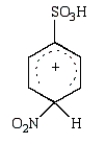
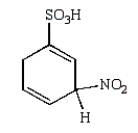
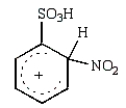
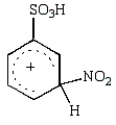
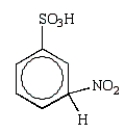
The predominant intermediate in the nitration of benzenesulfonic acid is:


A) The predominant intermediate in the nitration of benzenesulfonic acid is: A)    B)    C)    D)    E)
B) The predominant intermediate in the nitration of benzenesulfonic acid is: A)    B)    C)    D)    E)
C) The predominant intermediate in the nitration of benzenesulfonic acid is: A)    B)    C)    D)    E)
D) The predominant intermediate in the nitration of benzenesulfonic acid is: A)    B)    C)    D)    E)
E) The predominant intermediate in the nitration of benzenesulfonic acid is: A)    B)    C)    D)    E)

F) A) and B)
G) B) and E)

Correct Answer

verifed

verified

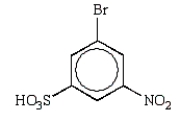
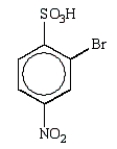
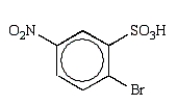
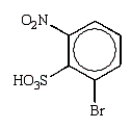
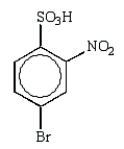
The predominant product from sequential nitration and bromination of benzenesulfonic acid is:


A) The predominant product from sequential nitration and bromination of benzenesulfonic acid is: A)    B)    C)    D)    E)
B) The predominant product from sequential nitration and bromination of benzenesulfonic acid is: A)    B)    C)    D)    E)
C) The predominant product from sequential nitration and bromination of benzenesulfonic acid is: A)    B)    C)    D)    E)
D) The predominant product from sequential nitration and bromination of benzenesulfonic acid is: A)    B)    C)    D)    E)
E) The predominant product from sequential nitration and bromination of benzenesulfonic acid is: A)    B)    C)    D)    E)

F) A) and E)
G) A) and B)

Correct Answer

verifed

verified

The correct name for The correct name for   is A)  2-chloro-4-bromotoluene. B)  o-chloro-p-bromotoluene. C)  1-bromo-3-chloro-4-methylbenzene. D)  4-bromo-2-chlorotoluene. E)  m-chlorobromotoluene. is


A) 2-chloro-4-bromotoluene.
B) o-chloro-p-bromotoluene.
C) 1-bromo-3-chloro-4-methylbenzene.
D) 4-bromo-2-chlorotoluene.
E) m-chlorobromotoluene.

F) All of the above
G) B) and C)

Correct Answer

verifed

verified

Showing 21 - 40 of 46

Related Exams

Show Answer