Filters
Question type

Study Flashcards

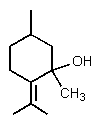
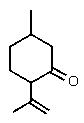
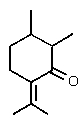
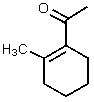
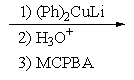
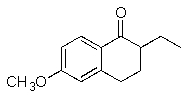
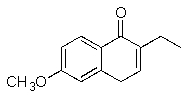
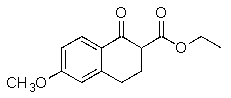
What would be the expected product of the following reaction? What would be the expected product of the following reaction?   A)    B)    C)    D)    E)


A)
What would be the expected product of the following reaction?   A)    B)    C)    D)    E)
B)
What would be the expected product of the following reaction?   A)    B)    C)    D)    E)
C)
What would be the expected product of the following reaction?   A)    B)    C)    D)    E)
D)
What would be the expected product of the following reaction?   A)    B)    C)    D)    E)
E)
What would be the expected product of the following reaction?   A)    B)    C)    D)    E)

F) A) and B)
G) C) and E)

Correct Answer

verifed

verified

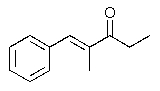
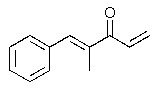
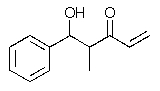
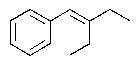
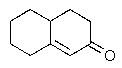
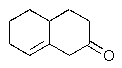
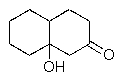
What product results when the following aldol product is treated with dilute acid? What product results when the following aldol product is treated with dilute acid?   A)    <sup> </sup> B)    C)    D)    E)  None of these are formed.


A)
What product results when the following aldol product is treated with dilute acid?   A)    <sup> </sup> B)    C)    D)    E)  None of these are formed.
B)
What product results when the following aldol product is treated with dilute acid?   A)    <sup> </sup> B)    C)    D)    E)  None of these are formed.
C)
What product results when the following aldol product is treated with dilute acid?   A)    <sup> </sup> B)    C)    D)    E)  None of these are formed.
D)
What product results when the following aldol product is treated with dilute acid?   A)    <sup> </sup> B)    C)    D)    E)  None of these are formed.
E) None of these are formed.

F) A) and B)
G) A) and E)

Correct Answer

verifed

verified

What organic molecule would you expect to be present in significant amounts under the following conditions? What organic molecule would you expect to be present in significant amounts under the following conditions?   A)    B)    C)    D)    E)


A)
What organic molecule would you expect to be present in significant amounts under the following conditions?   A)    B)    C)    D)    E)
B)
What organic molecule would you expect to be present in significant amounts under the following conditions?   A)    B)    C)    D)    E)
C)
What organic molecule would you expect to be present in significant amounts under the following conditions?   A)    B)    C)    D)    E)
D)
What organic molecule would you expect to be present in significant amounts under the following conditions?   A)    B)    C)    D)    E)
E)
What organic molecule would you expect to be present in significant amounts under the following conditions?   A)    B)    C)    D)    E)

F) A) and B)
G) None of the above

Correct Answer

verifed

verified

What would be the major product of the following reaction? What would be the major product of the following reaction?   A)    B)    C)    D)    E)


A)
What would be the major product of the following reaction?   A)    B)    C)    D)    E)
B)
What would be the major product of the following reaction?   A)    B)    C)    D)    E)
C)
What would be the major product of the following reaction?   A)    B)    C)    D)    E)
D)
What would be the major product of the following reaction?   A)    B)    C)    D)    E)
E)
What would be the major product of the following reaction?   A)    B)    C)    D)    E)

F) B) and C)
G) None of the above

Correct Answer

verifed

verified

What would you expect to result from the following reaction? What would you expect to result from the following reaction?   A)    B)    C)    D)    E)


A)
What would you expect to result from the following reaction?   A)    B)    C)    D)    E)
B)
What would you expect to result from the following reaction?   A)    B)    C)    D)    E)
C)
What would you expect to result from the following reaction?   A)    B)    C)    D)    E)
D)
What would you expect to result from the following reaction?   A)    B)    C)    D)    E)
E)
What would you expect to result from the following reaction?   A)    B)    C)    D)    E)

F) None of the above
G) A) and B)

Correct Answer

verifed

verified

Which proton in the following molecule is the most acidic? Which proton in the following molecule is the most acidic?   A)  1 B)  2 C)  3 D)  4 E)  5


A) 1
B) 2
C) 3
D) 4
E) 5

F) A) and D)
G) A) and E)

Correct Answer

verifed

verified

D

Predict the product of the following reaction: Predict the product of the following reaction:   A)    B)    C)    D)    E)


A)
Predict the product of the following reaction:   A)    B)    C)    D)    E)
B)
Predict the product of the following reaction:   A)    B)    C)    D)    E)
C)
Predict the product of the following reaction:   A)    B)    C)    D)    E)
D)
Predict the product of the following reaction:   A)    B)    C)    D)    E)
E)
Predict the product of the following reaction:   A)    B)    C)    D)    E)

F) A) and D)
G) D) and E)

Correct Answer

verifed

verified

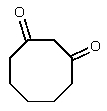
Which major product would you expect when the following diketone undergoes aldol cyclization in base,followed by acid? Which major product would you expect when the following diketone undergoes aldol cyclization in base,followed by acid?   A)    B)    C)    D)    E)


A)
Which major product would you expect when the following diketone undergoes aldol cyclization in base,followed by acid?   A)    B)    C)    D)    E)
B)
Which major product would you expect when the following diketone undergoes aldol cyclization in base,followed by acid?   A)    B)    C)    D)    E)
C)
Which major product would you expect when the following diketone undergoes aldol cyclization in base,followed by acid?   A)    B)    C)    D)    E)
D)
Which major product would you expect when the following diketone undergoes aldol cyclization in base,followed by acid?   A)    B)    C)    D)    E)
E)
Which major product would you expect when the following diketone undergoes aldol cyclization in base,followed by acid?   A)    B)    C)    D)    E)

F) C) and D)
G) A) and D)

Correct Answer

verifed

verified

Which of the following sets of reaction conditions will result in the following transformation? Which of the following sets of reaction conditions will result in the following transformation?   A)    B)    C)    D)    E)


A)
Which of the following sets of reaction conditions will result in the following transformation?   A)    B)    C)    D)    E)
B)
Which of the following sets of reaction conditions will result in the following transformation?   A)    B)    C)    D)    E)
C)
Which of the following sets of reaction conditions will result in the following transformation?   A)    B)    C)    D)    E)
D)
Which of the following sets of reaction conditions will result in the following transformation?   A)    B)    C)    D)    E)
E)
Which of the following sets of reaction conditions will result in the following transformation?   A)    B)    C)    D)    E)

F) A) and B)
G) A) and C)

Correct Answer

verifed

verified

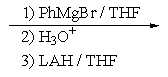
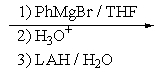
Predict the major organic product of the following reaction sequence. Predict the major organic product of the following reaction sequence.   A)    B)    C)    D)    E)


A)
Predict the major organic product of the following reaction sequence.   A)    B)    C)    D)    E)
B)
Predict the major organic product of the following reaction sequence.   A)    B)    C)    D)    E)
C)
Predict the major organic product of the following reaction sequence.   A)    B)    C)    D)    E)
D)
Predict the major organic product of the following reaction sequence.   A)    B)    C)    D)    E)
E)
Predict the major organic product of the following reaction sequence.   A)    B)    C)    D)    E)

F) A) and C)
G) C) and D)

Correct Answer

verifed

verified

Which set of reagents would be needed for the following conversion? Which set of reagents would be needed for the following conversion?   A)  NaOCH<sub>2</sub>CH<sub>3</sub>,CH<sub>3</sub>I B)  PhCH<sub>2</sub>MgBr,then H<sub>3</sub>O<sup>+</sup> C)  CH<sub>3</sub>MgBr,then PhCH<sub>2</sub>Br D)  H<sub>3</sub>O<sup>+</sup>,then PhCH<sub>2</sub>Br E)  LDA,then PhCH<sub>2</sub>Br


A) NaOCH2CH3,CH3I
B) PhCH2MgBr,then H3O+
C) CH3MgBr,then PhCH2Br
D) H3O+,then PhCH2Br
E) LDA,then PhCH2Br

F) A) and E)
G) A) and B)

Correct Answer

verifed

verified

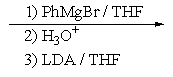
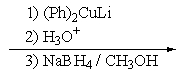
Predict the major organic product of the following reaction sequence. Predict the major organic product of the following reaction sequence.   A)    B)    C)    D)    E)


A)
Predict the major organic product of the following reaction sequence.   A)    B)    C)    D)    E)
B)
Predict the major organic product of the following reaction sequence.   A)    B)    C)    D)    E)
C)
Predict the major organic product of the following reaction sequence.   A)    B)    C)    D)    E)
D)
Predict the major organic product of the following reaction sequence.   A)    B)    C)    D)    E)
E)
Predict the major organic product of the following reaction sequence.   A)    B)    C)    D)    E)

F) A) and E)
G) All of the above

Correct Answer

verifed

verified

The addition of either the methyl Grignard reagent or methyllithium to camphor,followed by hydrolysis,produces a tertiary alcohol known as 2-methylisoborneol,an algal metabolite which imparts a musty odor to water at very low concentrations.However,the yield of alcohol does not exceed 50%,and large amounts of camphor are recovered from the reaction even when a large excess of the Grignard or lithium reagent are used.What would be the most plausible explanation? The addition of either the methyl Grignard reagent or methyllithium to camphor,followed by hydrolysis,produces a tertiary alcohol known as 2-methylisoborneol,an algal metabolite which imparts a musty odor to water at very low concentrations.However,the yield of alcohol does not exceed 50%,and large amounts of camphor are recovered from the reaction even when a large excess of the Grignard or lithium reagent are used.What would be the most plausible explanation?   A)  Ketones do not react with Grignard or lithium reagents. B)  The Grignard or lithium reagent had obviously degraded during storage. C)  The mechanism requires that,for each alcohol formed,one ketone molecule must remain unreacted. D)  With hindered ketones,the organometallic reagent could function as a base rather than as a nucleophile. E)  Alcohol formed early in the reaction could form an unreactive hemiacetal with remaining ketone.


A) Ketones do not react with Grignard or lithium reagents.
B) The Grignard or lithium reagent had obviously degraded during storage.
C) The mechanism requires that,for each alcohol formed,one ketone molecule must remain unreacted.
D) With hindered ketones,the organometallic reagent could function as a base rather than as a nucleophile.
E) Alcohol formed early in the reaction could form an unreactive hemiacetal with remaining ketone.

F) A) and B)
G) None of the above

Correct Answer

verifed

verified

D

To which side,if any,would the following equilibrium lie? To which side,if any,would the following equilibrium lie?   A)  To the left B)  To the right C)  Equally to the left and right D)  Reaction cannot occur at all E)  Equilibrium favors a different product.


A) To the left
B) To the right
C) Equally to the left and right
D) Reaction cannot occur at all
E) Equilibrium favors a different product.

F) A) and E)
G) B) and D)

Correct Answer

verifed

verified

Predict the major organic product of the following reaction. Predict the major organic product of the following reaction.   A)    B)    C)    D)    E)


A)
Predict the major organic product of the following reaction.   A)    B)    C)    D)    E)
B)
Predict the major organic product of the following reaction.   A)    B)    C)    D)    E)
C)
Predict the major organic product of the following reaction.   A)    B)    C)    D)    E)
D)
Predict the major organic product of the following reaction.   A)    B)    C)    D)    E)
E)
Predict the major organic product of the following reaction.   A)    B)    C)    D)    E)

F) A) and E)
G) A) and B)

Correct Answer

verifed

verified

What product is formed in the aldol condensation of propanal? What product is formed in the aldol condensation of propanal?   A)    <sup> </sup> B)    C)    D)    E)


A)
What product is formed in the aldol condensation of propanal?   A)    <sup> </sup> B)    C)    D)    E)
B)
What product is formed in the aldol condensation of propanal?   A)    <sup> </sup> B)    C)    D)    E)
C)
What product is formed in the aldol condensation of propanal?   A)    <sup> </sup> B)    C)    D)    E)
D)
What product is formed in the aldol condensation of propanal?   A)    <sup> </sup> B)    C)    D)    E)
E)
What product is formed in the aldol condensation of propanal?   A)    <sup> </sup> B)    C)    D)    E)

F) A) and D)
G) A) and E)

Correct Answer

verifed

verified

One product of the following reaction would be: One product of the following reaction would be:   A)    B)    C)    D)    E)  None of these are correct.


A)
One product of the following reaction would be:   A)    B)    C)    D)    E)  None of these are correct.
B)
One product of the following reaction would be:   A)    B)    C)    D)    E)  None of these are correct.
C)
One product of the following reaction would be:   A)    B)    C)    D)    E)  None of these are correct.
D)
One product of the following reaction would be:   A)    B)    C)    D)    E)  None of these are correct.
E) None of these are correct.

F) A) and D)
G) B) and D)

Correct Answer

verifed

verified

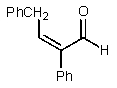
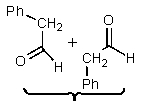
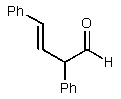
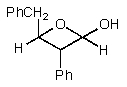
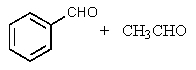
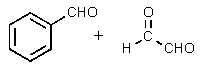
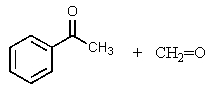
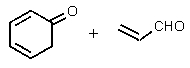
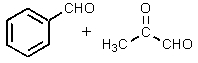
What reactants would be used to produce cinnamaldehyde? What reactants would be used to produce cinnamaldehyde?   A)    B)    C)    D)    E)


A)
What reactants would be used to produce cinnamaldehyde?   A)    B)    C)    D)    E)
B)
What reactants would be used to produce cinnamaldehyde?   A)    B)    C)    D)    E)
C)
What reactants would be used to produce cinnamaldehyde?   A)    B)    C)    D)    E)
D)
What reactants would be used to produce cinnamaldehyde?   A)    B)    C)    D)    E)
E)
What reactants would be used to produce cinnamaldehyde?   A)    B)    C)    D)    E)

F) D) and E)
G) C) and D)

Correct Answer

verifed

verified

Predict the major organic product of the following reaction. Predict the major organic product of the following reaction.   A)    B)    C)    D)    E)


A)
Predict the major organic product of the following reaction.   A)    B)    C)    D)    E)
B)
Predict the major organic product of the following reaction.   A)    B)    C)    D)    E)
C)
Predict the major organic product of the following reaction.   A)    B)    C)    D)    E)
D)
Predict the major organic product of the following reaction.   A)    B)    C)    D)    E)
E)
Predict the major organic product of the following reaction.   A)    B)    C)    D)    E)

F) C) and D)
G) A) and D)

Correct Answer

verifed

verified

What major product would you expect from the following reaction? What major product would you expect from the following reaction?   A)    B)    C)    D)    E)


A)
What major product would you expect from the following reaction?   A)    B)    C)    D)    E)
B)
What major product would you expect from the following reaction?   A)    B)    C)    D)    E)
C)
What major product would you expect from the following reaction?   A)    B)    C)    D)    E)
D)
What major product would you expect from the following reaction?   A)    B)    C)    D)    E)
E)
What major product would you expect from the following reaction?   A)    B)    C)    D)    E)

F) D) and E)
G) A) and D)

Correct Answer

verifed

verified

D

Showing 1 - 20 of 31

Related Exams

Show Answer